When the Clinical Trial Comes Home
A study visit at the kitchen table could remove a long journey. Good trial design also asks who gains access, who takes on new work, and how the evidence stays dependable.
ClarusBIOTECH REVIEWRead, listen & keep
Narrated by Hermione. Save the audio for offline listening.
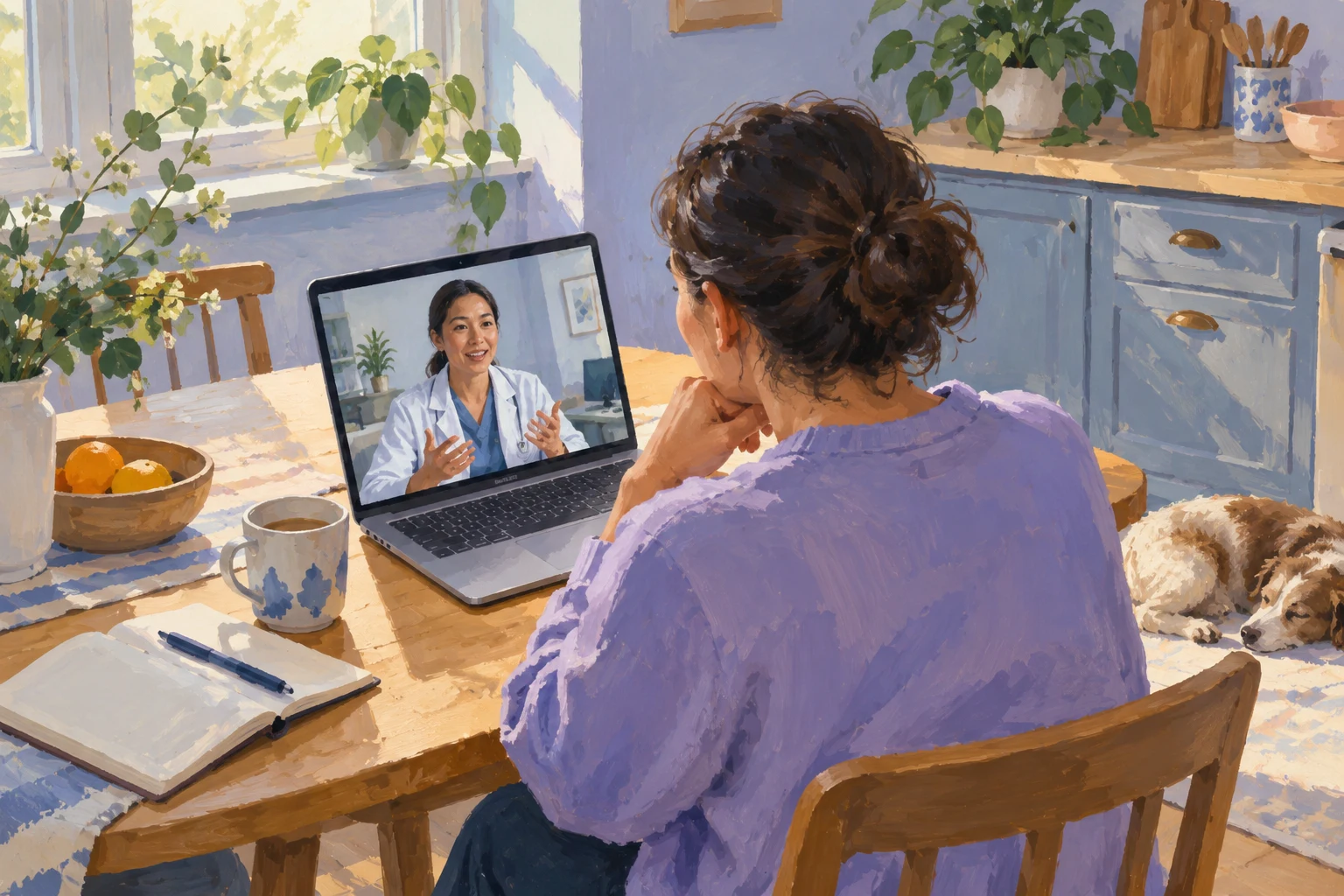
A trial appointment may last thirty minutes. Getting to it can occupy an entire day.
Consider a fictional participant arranging time off work, finding someone to collect a child, and driving to a research center for a routine conversation. Moving an appropriate visit to a video call could change the practical meaning of participation. The scientific question would remain important; the journey would become smaller.
That possibility is the appeal of bringing some trial activities closer to daily life. It also presents a design challenge. Convenience needs to be considered alongside safety, the quality of measurements, and the support people need to take part.
A trial can have more than one address
FDA's September 2024 final guidance describes decentralized elements such as telehealth visits with trial personnel, home visits by remote trial personnel, and activities involving local healthcare providers. A trial can incorporate these elements without moving every activity away from a traditional research site.[1]
The distinction matters. A complex assessment or administration of an investigational product may need a site visit, while another activity can be conducted closer to home. The full guidance discusses considerations including oversight, participant safety, investigational products, and the use of software.[2]
For the person considering enrollment, the useful explanation is concrete: which visits happen where, what equipment is needed, what the participant must do, and whom to contact with a problem. The phrase “decentralized trial” alone answers very few of those questions.
Count the work that changes hands
Imagine a study replacing four center visits with home activities. This is a planning example, not a result from a real trial. The participant might avoid several journeys. They might also need to charge a device, install an application, complete questionnaires, and arrange a quiet place for a call.
For one person, that exchange is welcome. For another, it adds a different kind of difficulty. A caregiver may become the unofficial technology coordinator. A shared household may offer little privacy. A participant with an unpredictable work schedule may need flexibility that the software does not provide.
Designing around people means looking at the total burden, including the tasks transferred from a site to a home. It also means testing instructions with the people expected to use them. What feels obvious to a development team may be confusing during an ordinary busy evening.
Access is more than distance
Reducing travel could make participation more feasible for some people. Whether a particular study achieves broader access is a question to measure. Who hears about it? Who is eligible? Who enrolls? Who remains involved? At which step do people encounter difficulty?
Those questions help separate an appealing intention from an observed result. A study may need language support, accessible interfaces, loaned equipment, flexible appointment times, or an alternative way to complete an activity. The appropriate choices depend on the population and the research.
Offering a remote option can be useful even when it is not the preferred option for everyone. A well-designed hybrid approach gives each activity an appropriate setting while explaining the choices clearly enough for participants to understand the commitment.
The evidence still needs a dependable path
Once activities happen in several settings, a research team needs a coherent way to understand the information it receives. Was a measurement collected as intended? Is a missing record a technical problem, an instruction problem, or a sign that someone needs assistance? Who notices and follows up?
These are operational questions with scientific consequences. A simpler experience for participants should be supported by a clear process behind the scenes. A home should not become a place where an unanswered message or failed upload is easy to overlook.
The promise of a trial at home is therefore larger than a video link. It is a research relationship designed to fit more thoughtfully into real lives. Bringing a visit closer can be the first step; making participation understandable and supported is the continuing work.
THE NEXT VALUE INFLECTION
What would change the decision
Ask participants which burdens disappeared and which new ones appeared. That answer can reveal whether moving a trial activity actually made participation easier.
Editorial record
Prepared by Clarus Biotech Review editorial team. Updated 10/2/2026.
Publication relationship: ClarusReview is connected to BioClarus Consulting. No article-specific sponsorship is recorded.
Report a correctionDiscuss this paper
Share evidence, ask a question, or offer a professional perspective. Community guidelines
Loading discussion…