Clarify the science
What must the evidence establish?Define the intended use, what is demonstrated, and which uncertainties matter to the next decision.
Evidence & developmentWork backward from the next consequential decision. Align the evidence, access pathway, execution, and capital needed to make that decision credible.
A strategic planning lens developed by BioClarus Consulting.
Define the intended use, what is demonstrated, and which uncertainties matter to the next decision.
Evidence & developmentMap the use case, delivery constraints, access pathway, operating assumptions, and resource dependencies.
Delivery & enabling technologyTranslate supported evidence into a coherent milestone narrative, with visible risks, ownership, and next steps.
Access & commercial value
Merck–Moderna’s collaboration provides the timeline; a separate cash model tests option exercise, delay, settlement and the no-payment branch.

Follow the decisions between a promising result and completed care—and distinguish scientific failure from avoidable execution gaps.
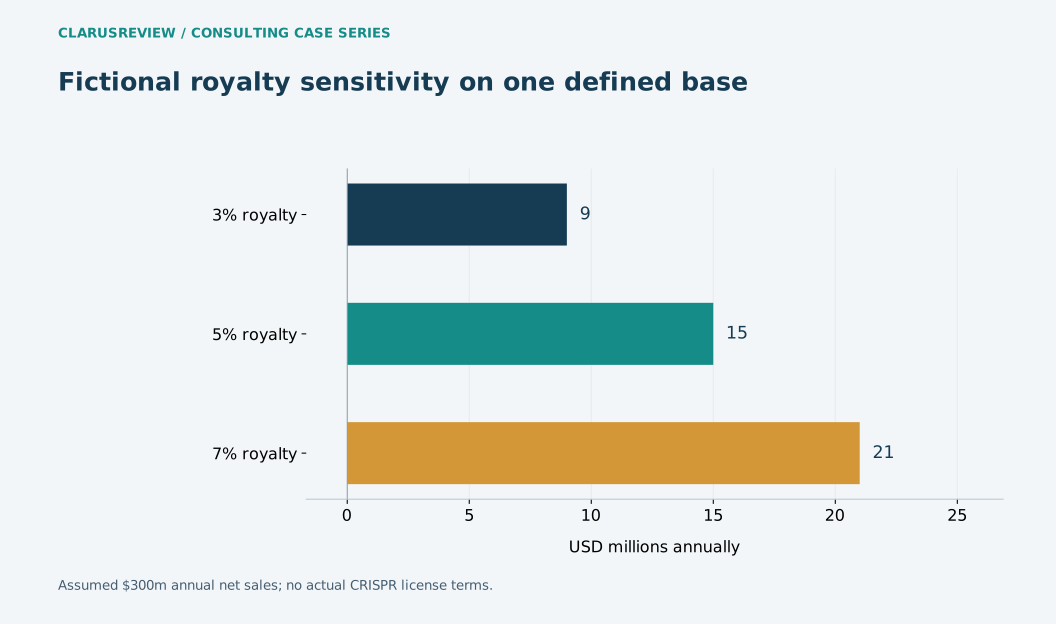
The CRISPR patent appeal frames a hypothetical rights map, licensing sensitivity and IP diligence gate.
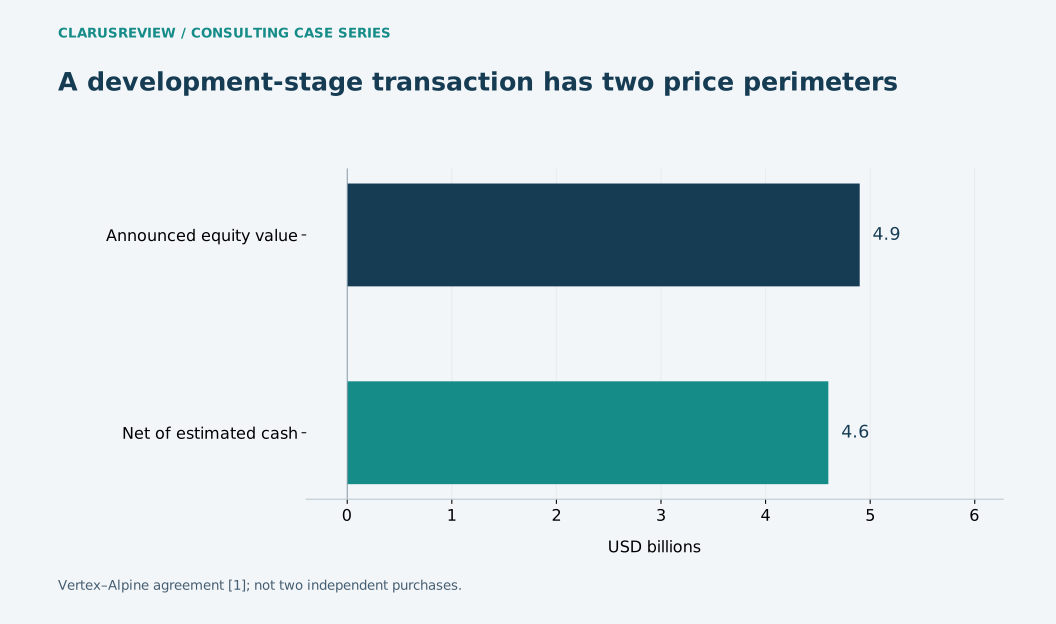
A development-stage acquisition and a company-reported upcoming review date frame a fictional option-value model.
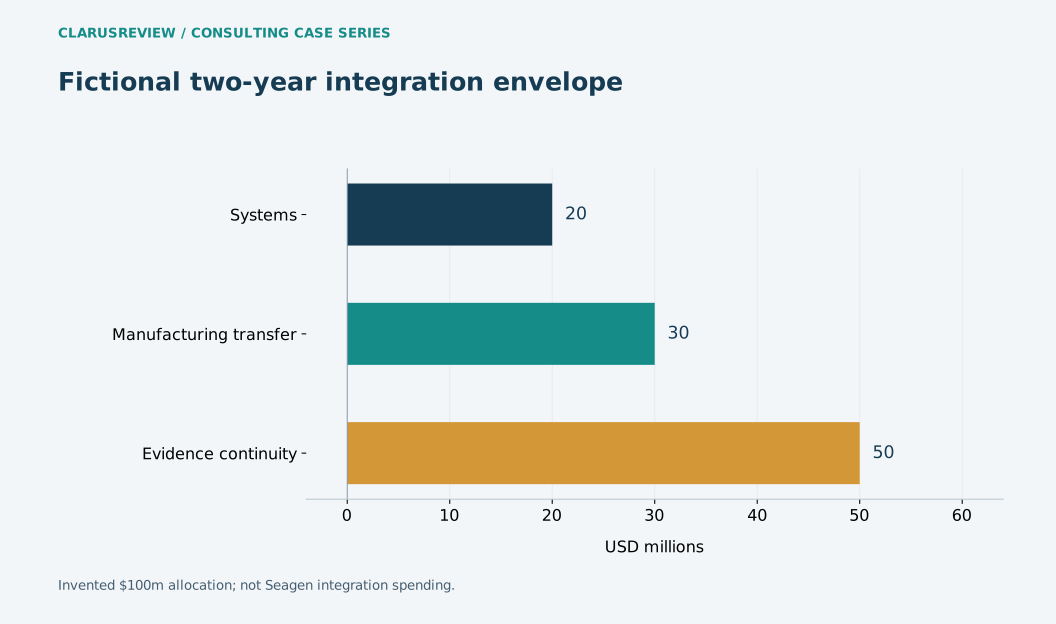
Pfizer–Seagen provides transaction context for a fictional buyer’s integration reserve and portfolio gates.
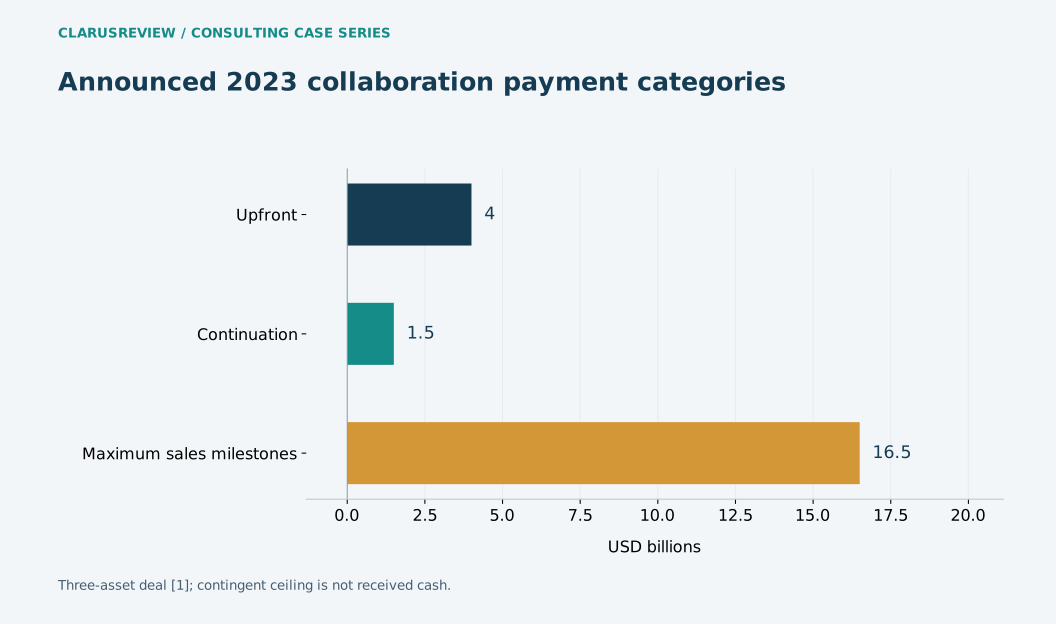
A major ADC collaboration and a recent filing setback frame staged licensing, dilution and evidence-linked funding.
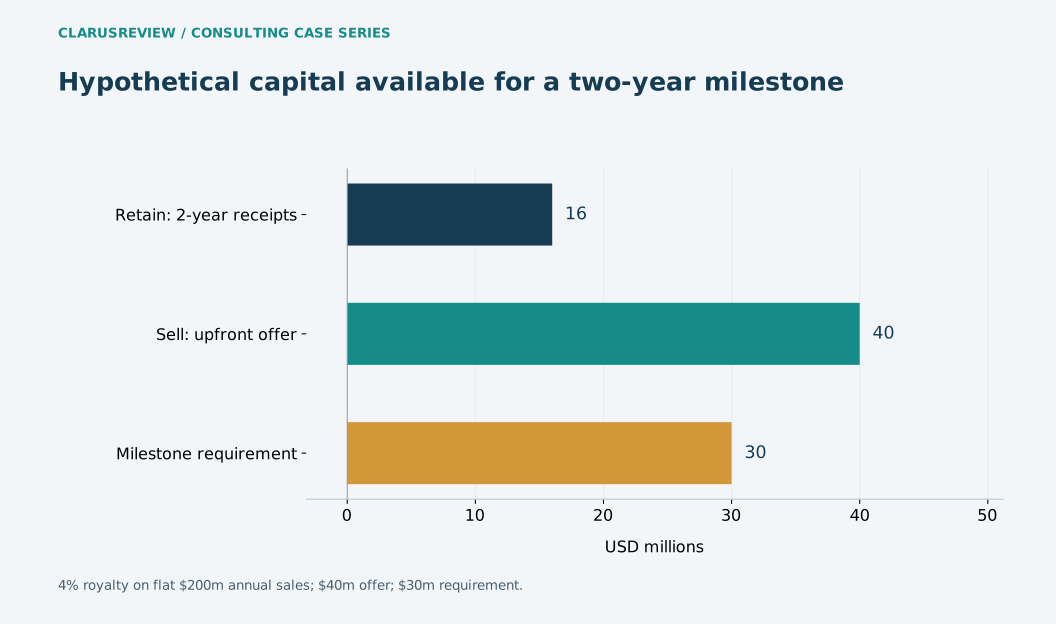
Cystic Fibrosis Foundation venture philanthropy frames a hypothetical royalty-retention and monetization decision.

A numerical framework for understanding why a milestone may change value—and why the calendar alone does not.

Turn a leadership directory into a dated, evidence-based partnering process with measurable progression.

A practical architecture for communicating clinical meaning, financing exposure and the work required for adoption.

A decision framework for separating clinical evidence, regulatory credibility and usable economic returns.
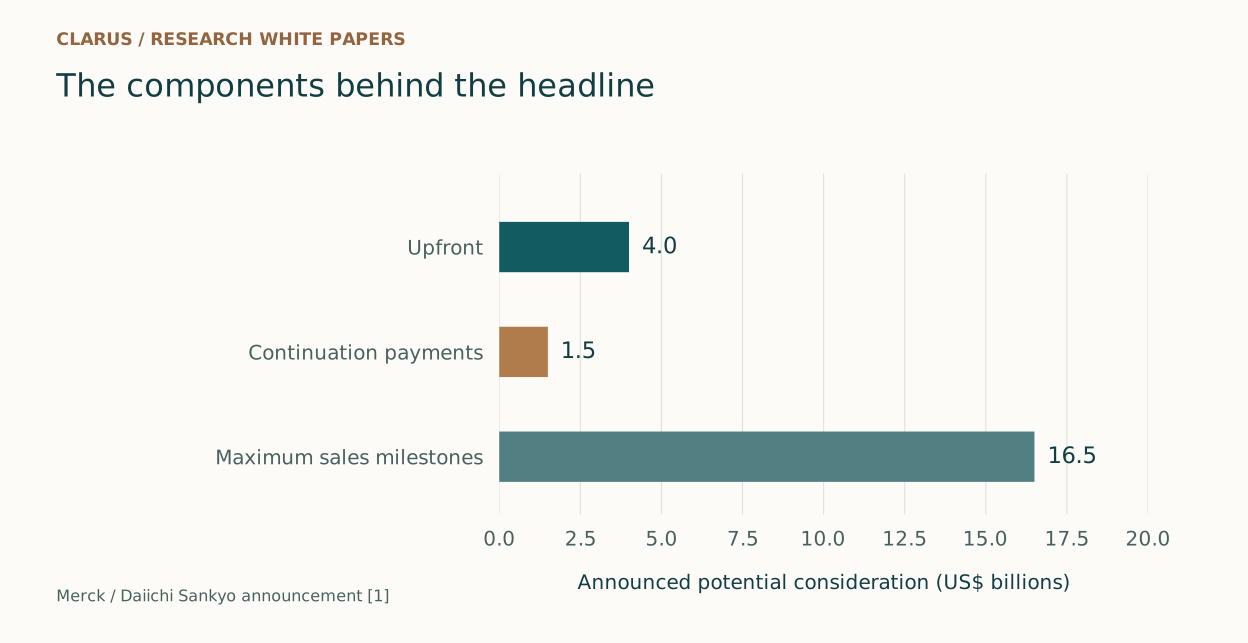
A large ADC collaboration illustrates why maximum announced consideration should be decomposed before it enters a value narrative.
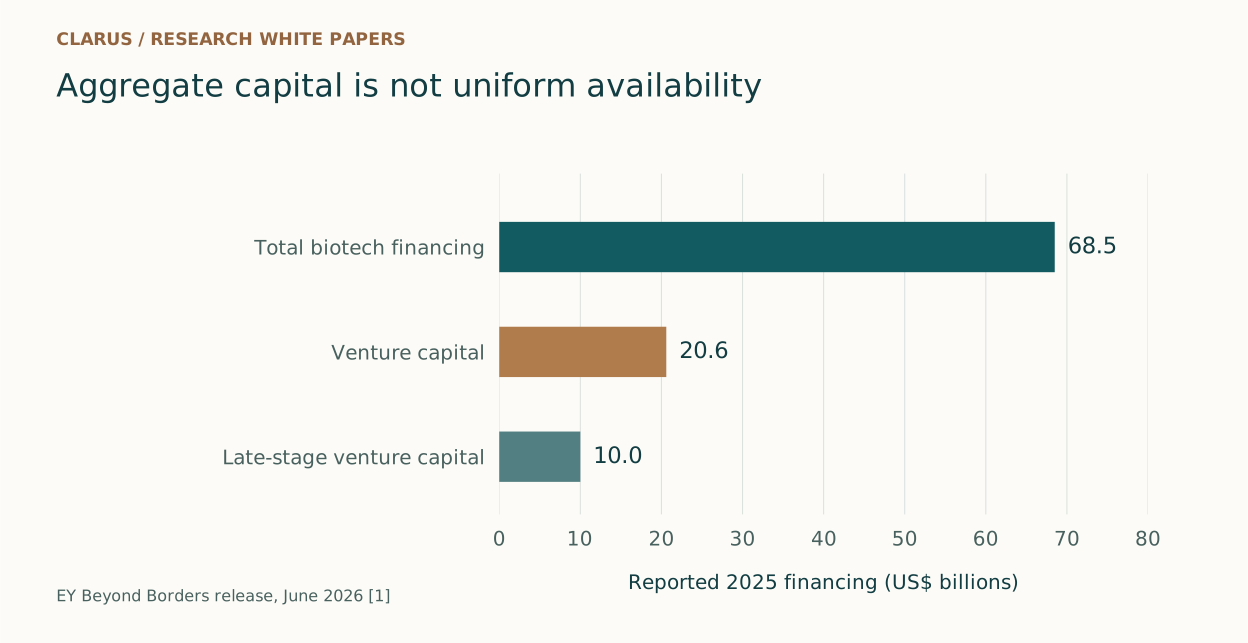
Recent industry financing data show why an aggregate recovery does not remove the need for company-level capital discipline.
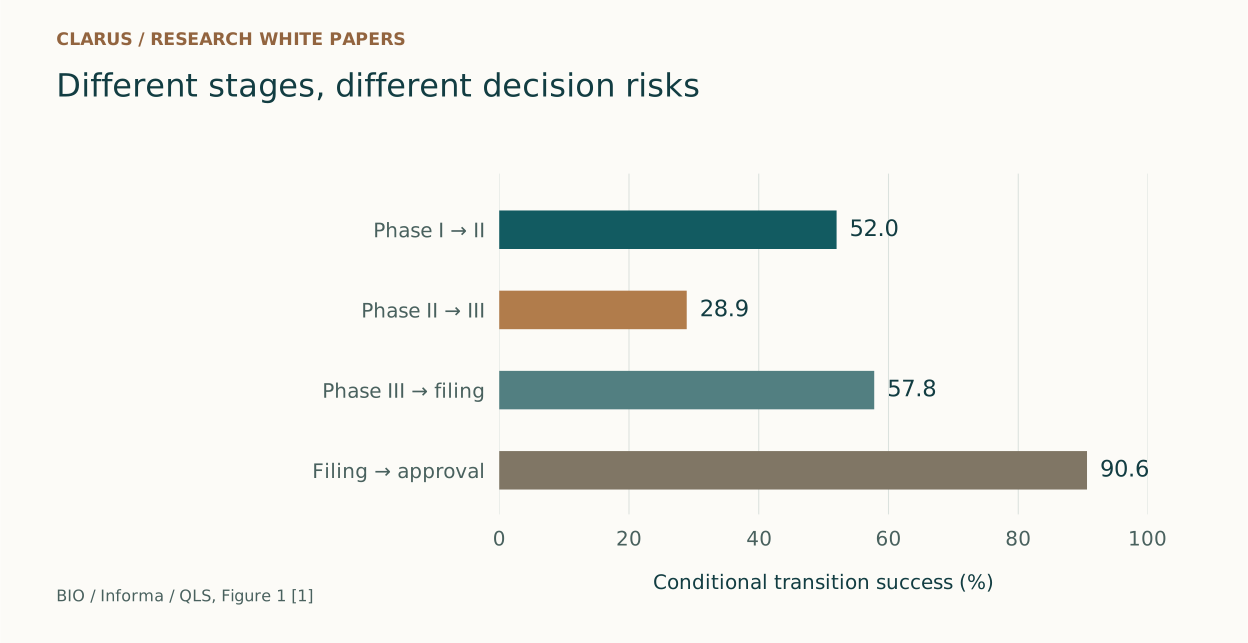
Historical transition rates help frame the challenge; the program’s evidence must determine the actual go, revise, or stop decision.

The 2016 hybrid system ties sensor, algorithm, pump, user tasks, and clinical evidence together.

HERALD and the 2021 rolling-review withdrawal illustrate a portfolio decision after an incomplete success.

The 2014 record connects a diagnostic metric to false positives, follow-up, and completed care.

Pfizer’s 2007 exit makes adoption testing and reversible deployment financially concrete.

The 2021–2024 sequence connects authorization, pricing, coverage, and the cost of stopping.

The original G551D program shows how a focused evidence package can make a decision consequential.
| Planning question | Useful working output | Decision it supports |
|---|---|---|
| What is the next inflection thesis? | Milestone brief and stakeholder map | Agree what progress must demonstrate |
| What evidence remains missing? | Evidence-gap register and target product assumptions | Prioritize decision-relevant work |
| What blocks practical adoption? | Patient journey, access, and workflow map | Sequence capabilities and partnerships |
| What could break the plan? | Risk register, scenarios, and spending gates | Define contingencies and resource commitments |
| Who owns the next decision? | Accountable owners and a review cadence | Keep the roadmap coherent as evidence changes |
The articles are editorial adaptations, rather than full document reproductions. They omit confidential campaign details, numerical forecasts, and time-sensitive product or policy claims. They distinguish strategic interpretation from clinical evidence.