Liver-chip validation: the evidence and investment gate for a NAM
FDA’s 2026 terminology change, a historical liver-chip benchmark and a transparent error-cost model show what a validation investment must establish.
From discovery to clinical evidence. Understand what a result establishes, and what remains uncertain.


A virtual counterpart makes an irresistible promise: explore possibilities before acting. Its usefulness depends on what it knows, what it leaves out, and how it earns trust.
4 min read

FDA’s 2026 terminology change, a historical liver-chip benchmark and a transparent error-cost model show what a validation investment must establish.
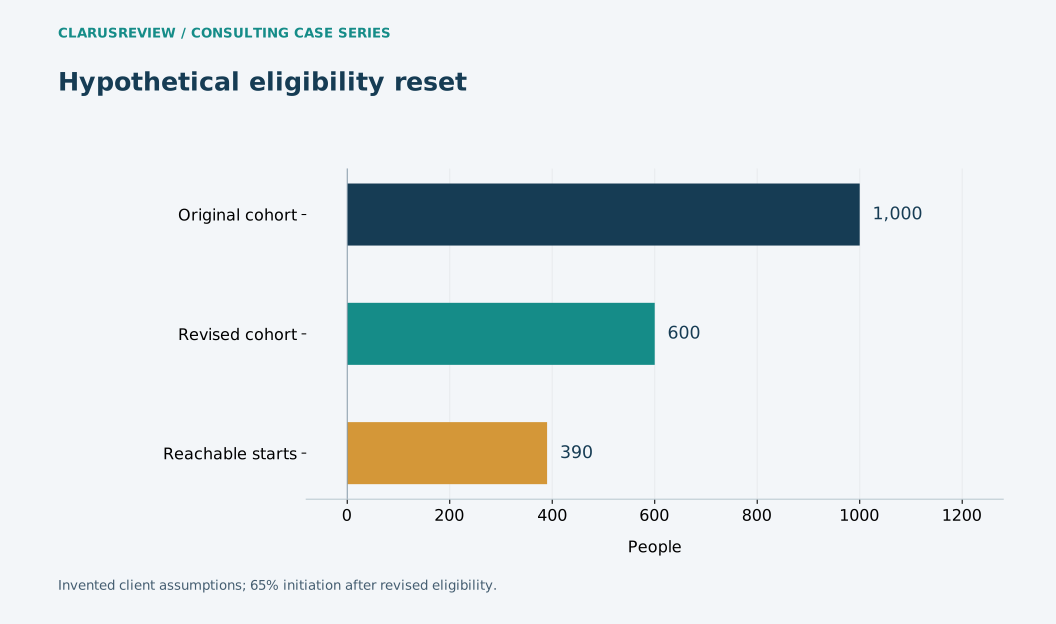
The Elevidys safety revision informs a hypothetical surveillance budget and an eligibility-sensitive operating plan.
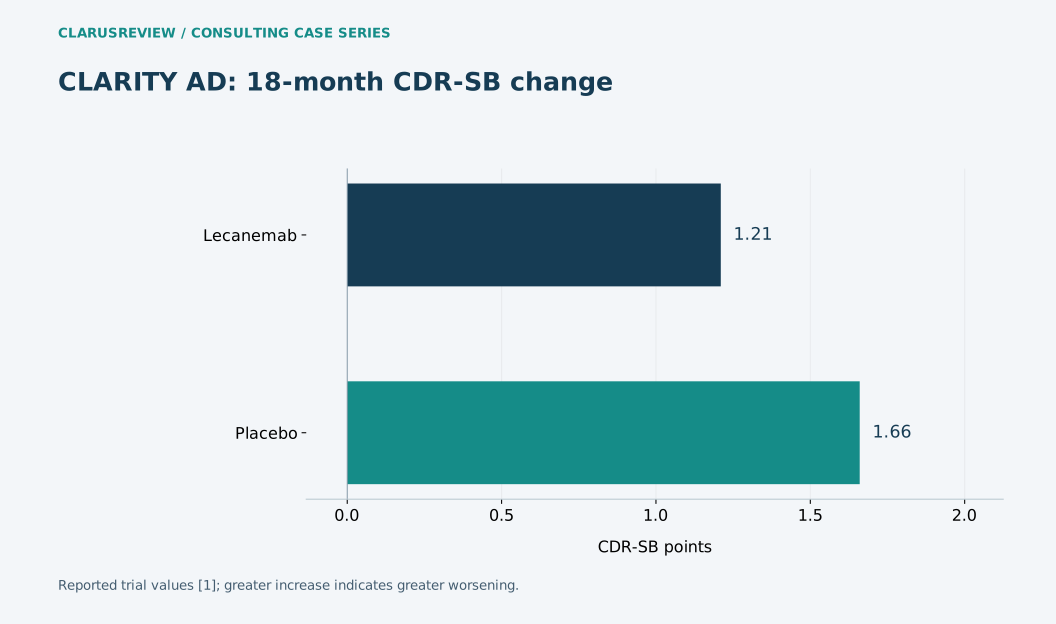
Leqembi’s randomized evidence and AMT-130’s September update frame a client’s sensitivity analysis and evidence reserve.
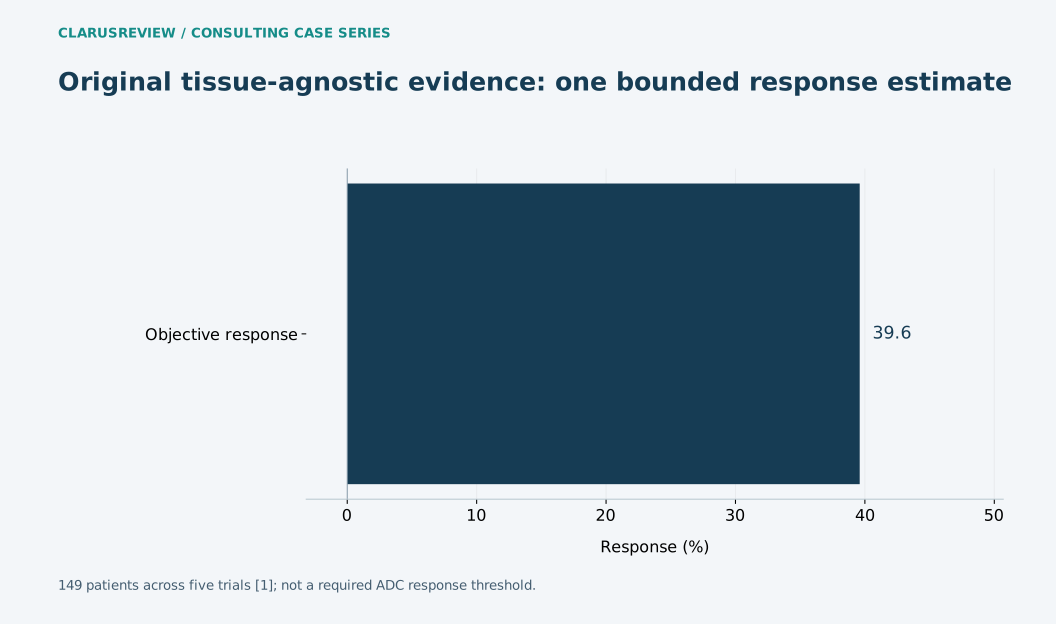
A September 2026 ADC filing withdrawal becomes a hypothetical evidence-gap, delay and cash-runway assignment.
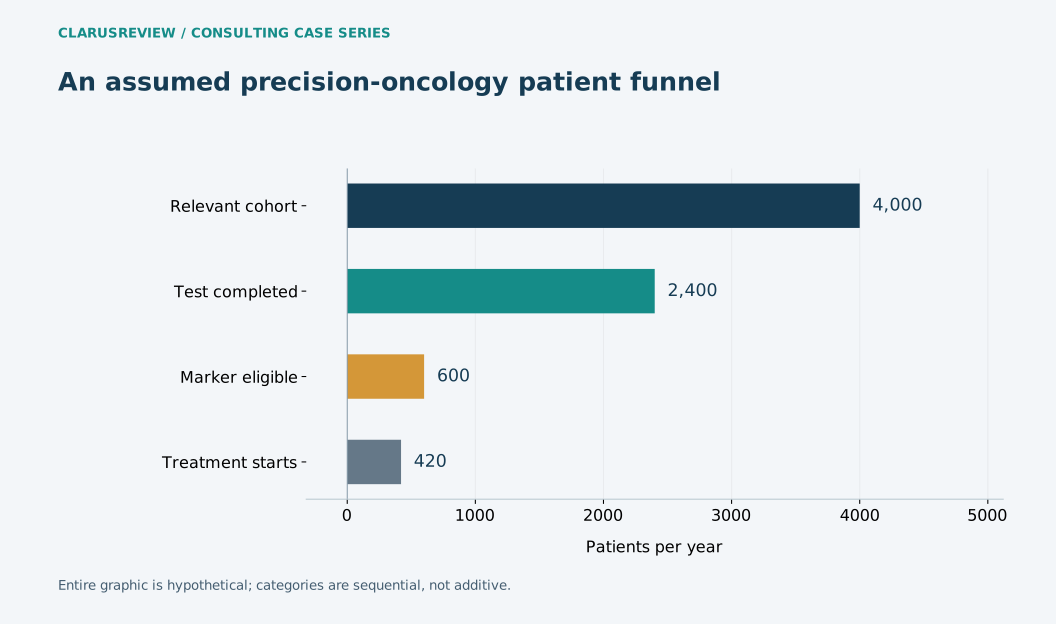
A drug–diagnostic operating model turns assay availability, testing attrition and turnaround into measurable launch dependencies.
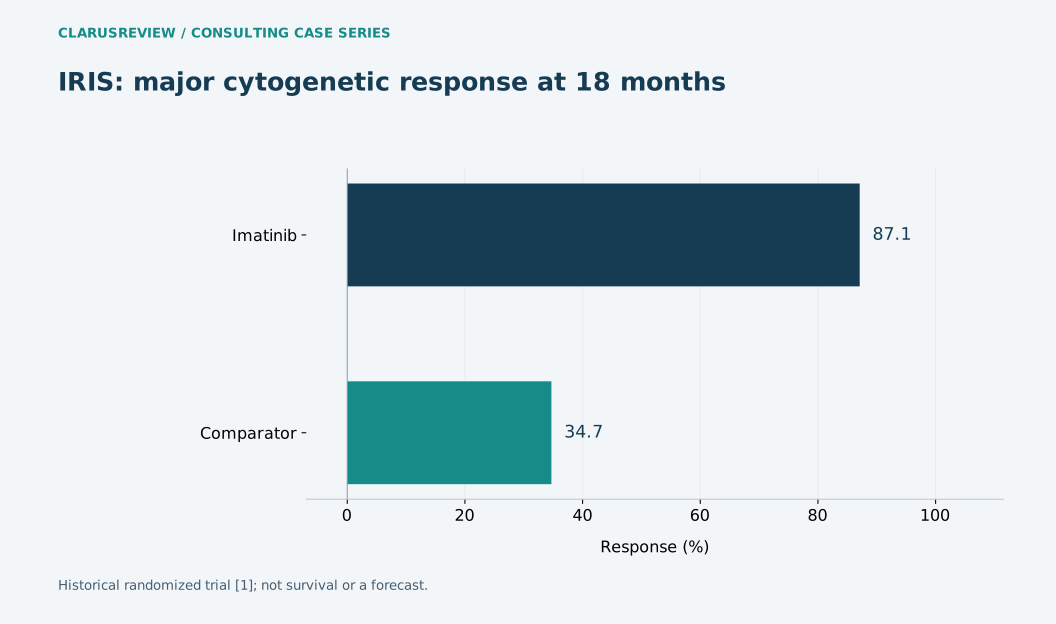
IRIS and a recent biomarker-led approval frame a hypothetical oncology program’s recruitment, assay and capital decisions.

AI can widen the search for a medicine. The more interesting question is how scientists decide which possibilities deserve to become experiments.
4 min read

Sotatercept and OCEANIC-AF illustrate why a benefit claim must remain tied to its population, comparator and endpoint.

Why a small, well-defined population still needs rigorous comparison, diagnostic execution and a clear financing plan.

Positive and negative trial examples show why endpoint choice, patient selection and execution costs must be assessed together.
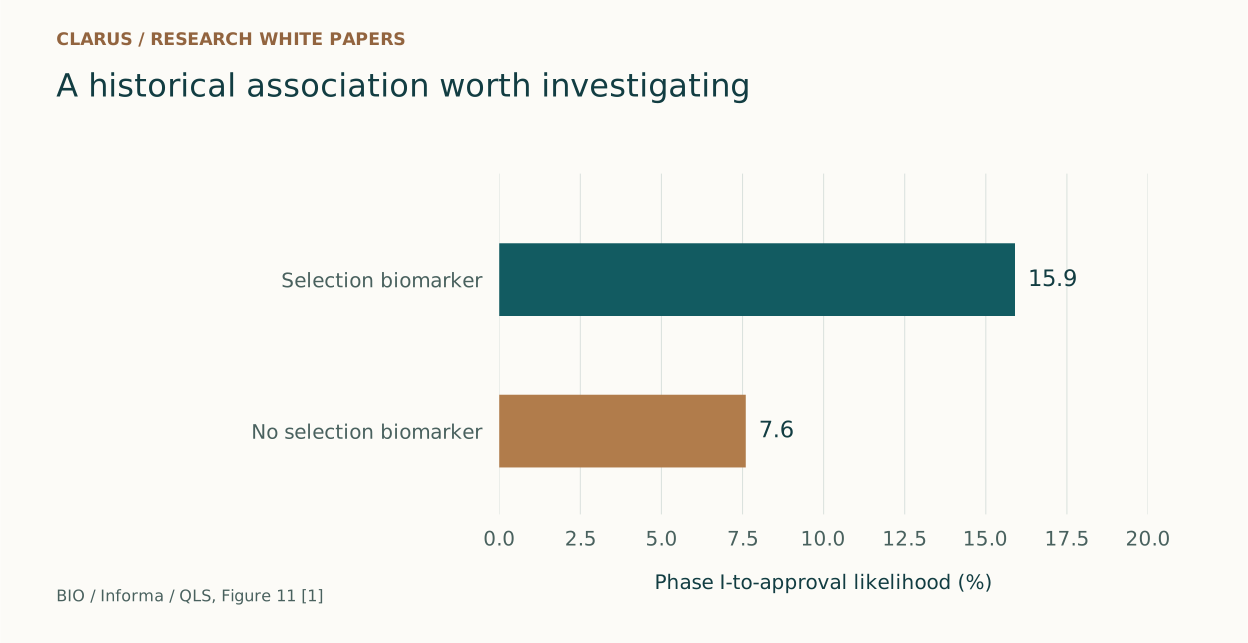
Historical industry data support careful study of biomarker-led programs while leaving important causal and operational questions open.
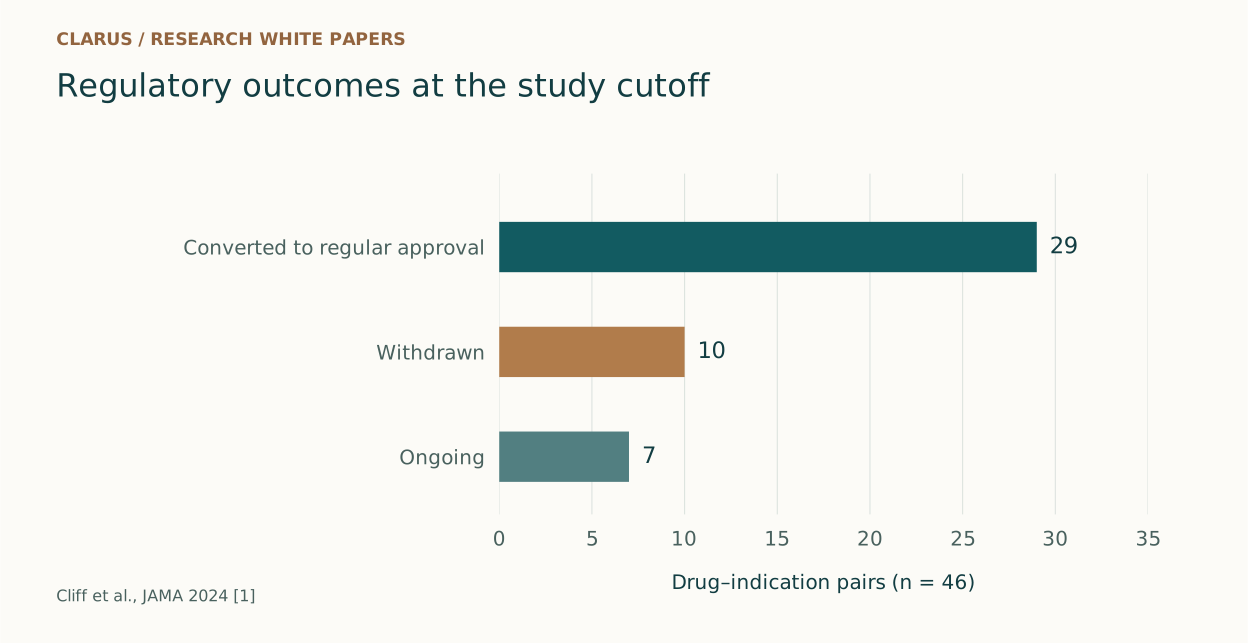
An oncology cohort shows why regulatory status and demonstrated patient benefit need separate tracking.
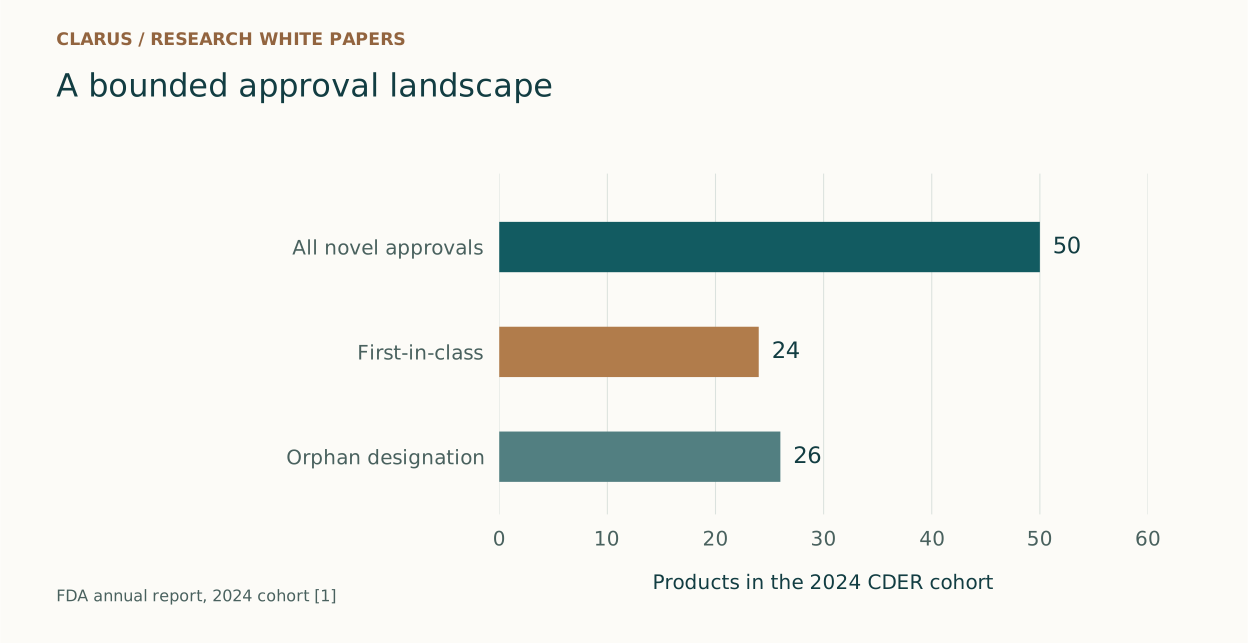
A defined FDA approval cohort can reveal the shape of innovation. It cannot rank clinical value or predict the next development program.

A result can move in the right direction while a person’s daily life remains difficult. Patient-reported outcomes help research ask more precisely what improvement means.
4 min read

The 2006 first-in-human event makes safety accountability an operating requirement.

An EGFR-selected trial demonstrates why population definition belongs in the clinical and access model.

APOLLO joined a molecular mechanism to 18-month clinical measures in a defined hereditary disease.

A 2020 trial shows why recovery time, mortality, and hospital economics require separate interpretations.

A fictional day asks what earlier detection, personalized treatment, and connected care would need to deliver for a real person.
5 min read