Data integrity is an acquisition workstream with its own clock
A historical gene-therapy data issue informs a hypothetical audit, remediation and transaction-delay model.
ClarusBIOTECH REVIEWRead, listen & keep
Narrated by Hermione. Save the audio for offline listening.
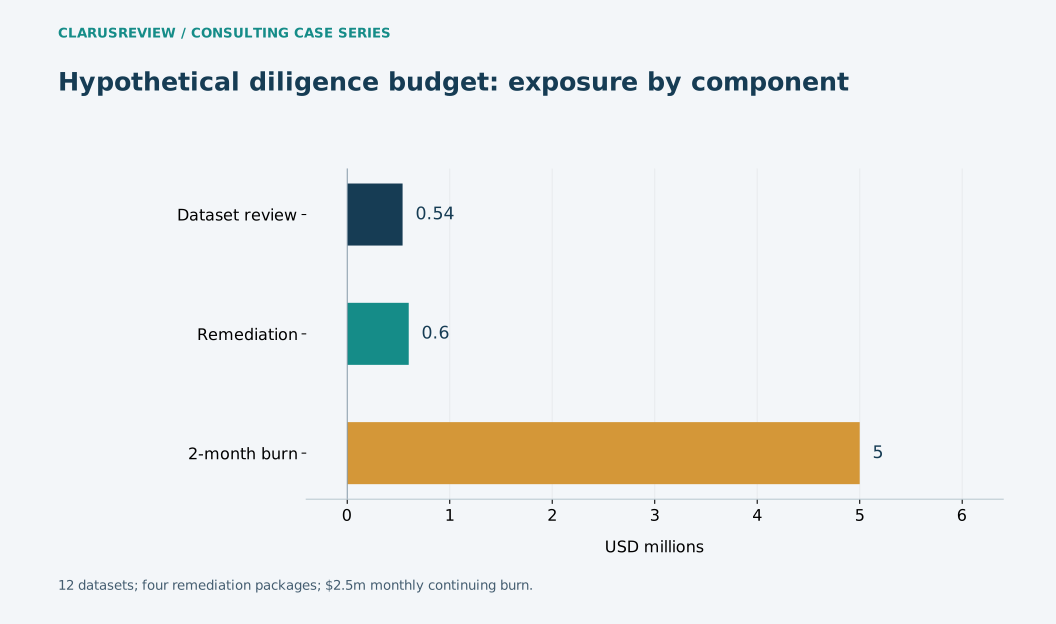
View figure data and context
| Measure | Value |
|---|---|
| Dataset review | 0.54 |
| Remediation | 0.6 |
| 2-month burn | 5 |
The consulting assignment
A diligence room can contain thousands of files and still leave the evidence chain unverified. The buyer needs to know how raw observations became reported results, which records changed, who approved those changes and whether the intended manufacturing process is supported by trustworthy data. That work requires specialist review, time and a contingency budget.
The documented comparator
FDA’s August 2019 Zolgensma statement described data-accuracy issues involving product-testing information submitted before approval. The statement is a data-governance case; it should not be rewritten as proof that clinical benefit was fabricated or that the product was ineffective. The scope of the finding matters as much as its existence. [1]
The current-news bridge
The FDA’s 2026 CMC flexibility framework makes a current distinction relevant: development flexibility is not permission to weaken the provenance of supporting records. A more tailored evidence package still needs traceable data. [2]
Hypothetical client and numerical assumptions
Imagine an unrelated acquisition target with 12 critical assay or manufacturing datasets. An audit costs an assumed $45,000 per dataset. Review therefore costs $540,000 before remediation. If four datasets require an additional $150,000 each, the combined workstream costs $1.14 million. These are fictional vendor-budget assumptions, not disclosed Zolgensma spending.
What the numbers change
If a two-month delay also consumes $2.5 million monthly in the target’s continuing burn, total modeled exposure becomes $6.14 million. Three months raises that to $8.64 million. The burn line belongs to the party carrying the cost during the delay; the transaction agreement determines whether that cost changes purchase consideration, financing need or neither.
Risk classification should distinguish missing metadata, inconsistent transformations, unverifiable source records and confirmed unreliable results. Re-running a test may address one issue while leaving the governance failure unresolved. A buyer should request both a scientific correction plan and controls that prevent recurrence.
Purchase-price holdbacks or milestone conditions cannot create trustworthy evidence. They can allocate financial exposure while the evidence is repaired. The operating plan should specify which work must finish before signing, closing or a later development gate. Otherwise legal protection can be mistaken for scientific de-risking and a deferred dataset can become a blocked regulatory dependency.
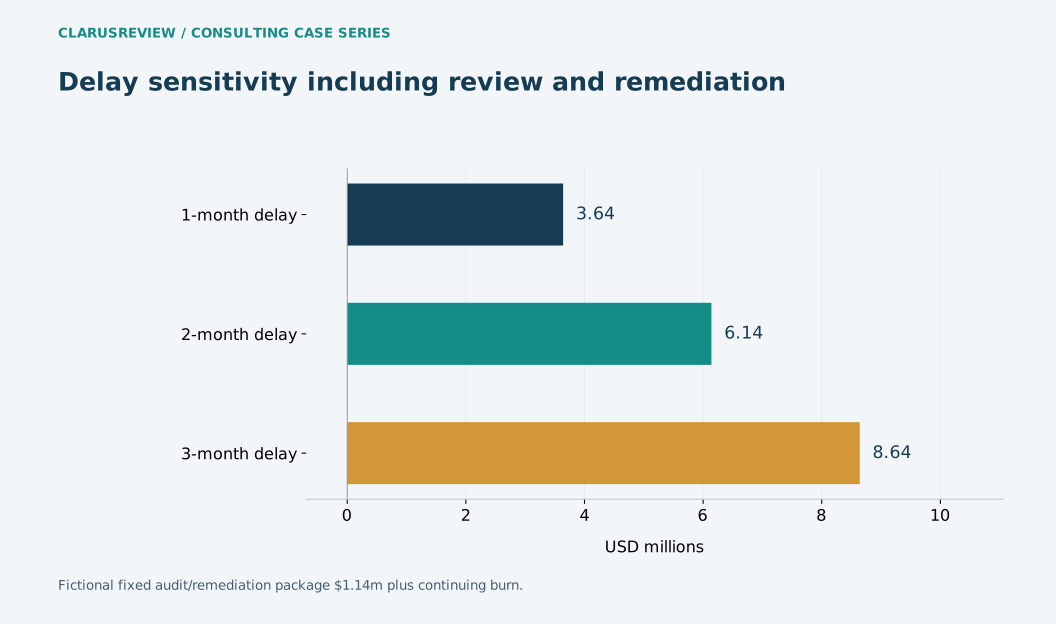
| Scenario | USD millions |
|---|---|
| 1-month delay | 3.64 |
| 2-month delay | 6.14 |
| 3-month delay | 8.64 |
The next decision gate
Start with a risk-ranked sample covering each critical claim, not a random file-count target. Expand review when discrepancies appear, preserve original records and record every reconciliation. Recommend closing only when the remaining issues have bounded implications, funded remediation and accountable owners; the fictional budget is a planning tool, not a conclusion about an actual transaction.
What to watch next
Expected pressure point: growing use of automated analysis can increase the need to preserve model versions, input lineage and reproducible transformations. No claim is made that automation itself caused the historical issue.
| Workstream | Measure to collect | Decision use |
|---|---|---|
| Traceability | Critical claims with verified raw-data lineage / total | Test whether the result can be reproduced |
| Remediation | Open issues by severity and decision dependency | Prevent a deferred issue from blocking a milestone |
| Transaction | Delay exposure by responsible party | Allocate costs without confusing protection with evidence |
Reporting cutoff: October 1, 2026 Pacific. Later outcomes are not assumed. These tools illustrate decisions; they are not validated clinical, legal or investment prediction models.
Diligence-delay exposure
Fixed fictional review/remediation cost is $1.14m; continuing burn is additional.
Exposure = delay × monthly burn + audit/remediation package.
Changing an input explores a scenario; it does not establish an observed result. Inputs stay in this page and are not submitted.
THE NEXT VALUE INFLECTION
What would change the decision
Start with a risk-ranked sample covering each critical claim, not a random file-count target. Expand review when discrepancies appear, preserve original records and record every reconciliation. Recommend closing only when the remaining issues have bounded implications, funded remediation and accountable owners; the fictional budget is a planning tool, not a conclusion about an actual transaction.
Editorial record
Prepared by Clarus Biotech Review editorial team. Updated 10/2/2026.
Publication relationship: ClarusReview is connected to BioClarus Consulting. No article-specific sponsorship is recorded.
Report a correctionDiscuss this paper
Share evidence, ask a question, or offer a professional perspective. Community guidelines
Loading discussion…