Afrezza: inhaled delivery brings a pulmonary workflow
The original 2014 authorization illustrates how a delivery route adds screening and monitoring dependencies.
ClarusBIOTECH REVIEWRead, listen & keep
Narration has not been recorded for this article’s current text. The written article is available to download.
Revised September 30, 2026 · Historical case analysis
Dates, outcomes, and decision boundaries
| Measure | Reported result | Context & source |
|---|---|---|
| FDA authorization | June 27, 2014 | Initial adult diabetes indication [2] |
| Pulmonary assessment | Before initiation | Original label includes spirometry [1] |
| First repeat assessment | 6 months | Historical labeled monitoring [1] |
| Continuing assessment | Annually | Historical labeled monitoring [1] |
The cited regulatory documents do not provide a launch budget, net price, or actual adoption rate. Suggested workflow metrics are Clarus planning measures.
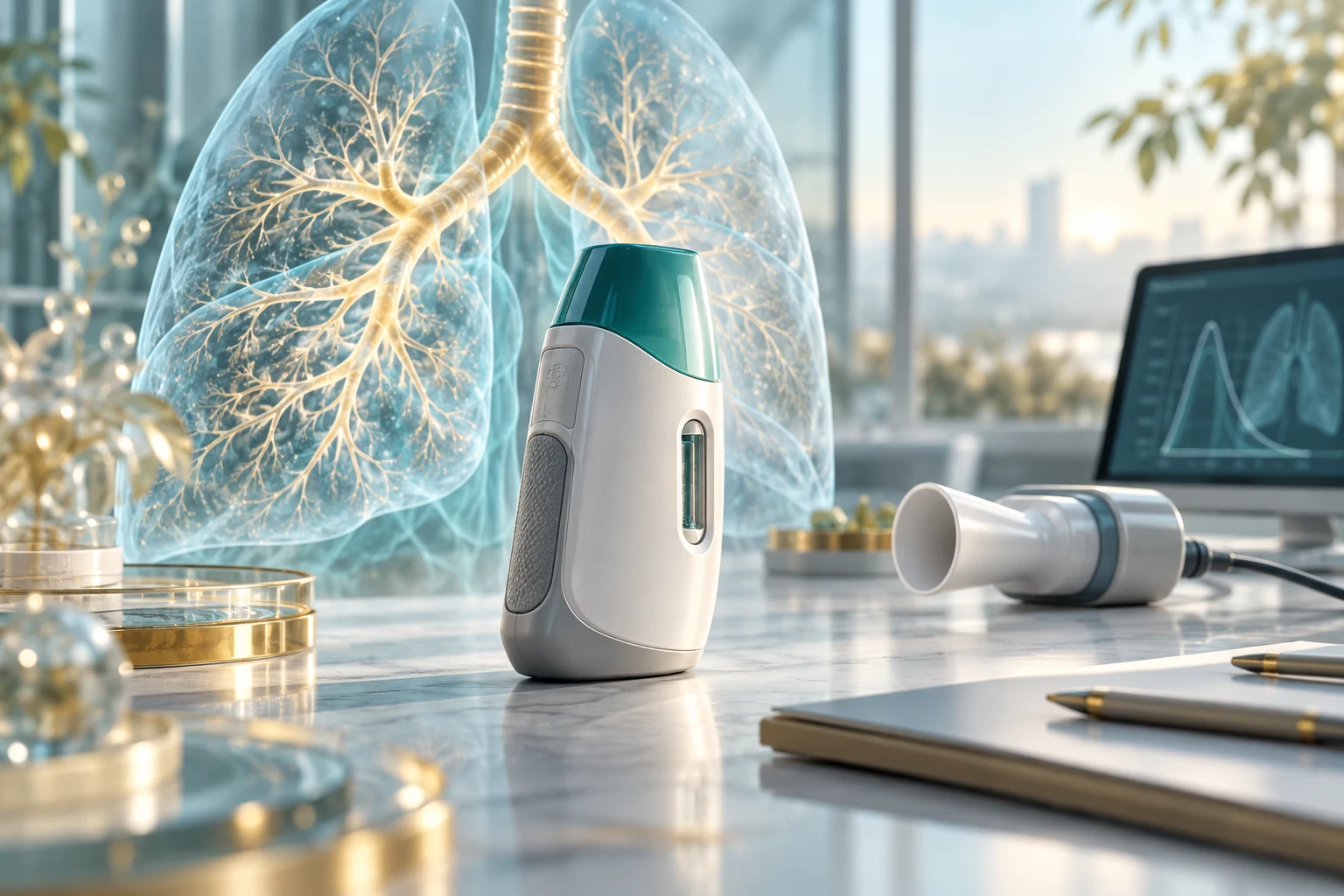
Afrezza demonstrates why delivery belongs in both the product profile and the care pathway. FDA's June 27, 2014 approval covered inhaled human insulin for glycemic control in adults with diabetes mellitus. The original label also contained a boxed warning about acute bronchospasm in patients with chronic lung disease. A route that avoids an injection still creates its own clinical requirements. [1, 2]
The route changes the work
The 2014 label required assessment for underlying lung disease before initiation, including spirometry. It called for pulmonary-function assessment after six months and annually thereafter. These historical requirements are useful evidence for an operating-model analysis; readers should use the current label for current prescribing decisions. [1]
A trial endpoint is only one component
An inhaled-insulin proposition must join glycemic efficacy, pulmonary safety, device handling, and suitable patient selection. Convenience should be tested with the intended user and routine workflow rather than assumed from the absence of a needle. A comparison that examines only administration preference can miss the cost and effort of the surrounding pathway.
Translate monitoring into adoption questions
For a launch team, the practical questions include who arranges testing, whether a test is readily available, how an abnormal result is handled, and how follow-up is remembered. Track these handoffs before interpreting prescription interest as completed adoption. The approval letter also required postmarketing work; authorization did not eliminate the need for longer-term evidence. [2]
A delivery-development scorecard
Separate product performance from pathway performance. The first asks whether the formulation and inhaler deliver the intended therapeutic result. The second asks whether eligible patients can complete screening, receive training, obtain the product, and sustain appropriate use. Linking those measures early can identify a route-specific bottleneck while a program still has options to address it.
What to measure for the next decision
| Dimension | KPI to collect | Decision use |
|---|---|---|
| Workflow | Screening-to-treatment completion | Count eligible referrals completing the required pathway. |
| Usability | Successful device-use demonstration | Measure critical tasks with representative users. |
| Cost | Testing and training cost per start | Include route-specific services in the access model. |
THE NEXT VALUE INFLECTION
What would change the decision
Separate product performance from pathway performance. The first asks whether the formulation and inhaler deliver the intended therapeutic result. The second asks whether eligible patients can complete screening, receive training, obtain the product, and sustain appropriate use. Linking those measures early can identify a route-specific bottleneck while a program still has options to address it.
Editorial record
Prepared by Clarus Biotech Review editorial team. Updated 10/1/2026.
Publication relationship: ClarusReview is connected to BioClarus Consulting. No article-specific sponsorship is recorded.
Report a correctionDiscuss this paper
Share evidence, ask a question, or offer a professional perspective. Community guidelines
Loading discussion…